A KOTOBUKIYA Japanese import! The God of Thunder is reborn in this stunning 12" statue, sculpted by Shinya Akao! Thor comes with a deluxe motif base that will be used for Captain America and Iron Man, both of which are released or will release in the near future. The three character's bases will link together to form a motif.
The concept is based on Avengers Reborn, a come back of the original Avengers. In 2011, Thor will make its Hollywood debut, directed by Kenneth Branagh. Thor will be played by Chris Hemsworth (Star Trek).
|
A KOTOBUKIYA Japanese import! Third in the line of Marvel Comics Bishoujo Statues (after Rogue and Black Widow) is the magical and mysterious Scarlet Witch. The beautiful mutant sorceress, and daughter of the incomparable Magneto, Wanda Maximoff exemplifies the Japanese Bishoujo (pretty girl) style, and was designed by the incomparable illustrator Shunya Yamashita! Fans should be familiar with Yamashita-sensei's style as Japan's leading Bishoujo artist from his art books, video game work, as well as multiple figural collaborations with Kotobukiya.
The Scarlet Witch is resplendent in her signature color, with ruby-red bodysuit, gloves, boots, cape, and headdress. She leaps right off of the comic book page in a relaxed flying pose, while she coyly points to her lips in a sultry manner. Her excellent sculpt highlights the details of her clothing as well as her long, flowing brown hair. The sorceress has a beautiful Bishoujo-styled facial sculpt complete with ruby lipstick and bright green eyes.
Standing at approximately 7 1/2" tall (in 1/8-scale with the other Marvel Bishoujo statues) , the Scarlet Witch was sculpted by Koei Matsumoto. Packaged in an attractive window box, the sexy sorceress is constructed of high-quality PVC plastic.
|
Like his previous incarnation in the Winter Soldier Fine Art Statue, the New Captain America is dynamically posed flying through the air, crashing into three Hydra troopers. Also sculpted by Junnosuke Abe the modern American hero is outfitted in his current costume, blending the traditional with the new. The classic red, white, and blue are offset by the new black bodysuit, complete with utility belt, combat knife, and pistol! Of course, he is clutching Rogers' original iconic shield. The hero's face is a grimace of anger and determination as he dispenses his own brand of justice.
Standing 13 inches tall, the New Captain America has the same high-quality cold cast porcelain construction that all of The Kotobukiya Collection shares, and is a limited, numbered edition. His base forms the other half of the Captain America shield symbol, matching up with the Winter Soldier Fine Art Statue's so the two heroes can fight back to back in a stunning diorama scene!
|
Imported from Hong Kong, made by Enterbay!
30 cm tall
Supreme Head Sculpture
Tailor-Made outfit with details
Cow Boy Hat
Metal cast Belt buckle
Deluxe Packaging
Figure Stand FS-100
Certificate Card
Product advised and directed by JAY CHOU
|
Imported from Hong Kong, made by Enterbay!
> 12 points of Articulation
> Extraordinarily lifelike muscle definition
> Maintained the robust build of Bruce Lee
> 3 extra posing hands
> Carefully crafted with supreme texture for finishing touch
> Made of extremely durable plastic for lifetime enjoyment
* This product is suitable for Bruce Lee “Fist of Fury” and the head sculpts for this edition (excludes clothing). Also suitable for all upcoming Bruce Lee products’ head sculpts.
|
HD MASTERPIECE, sub-brand of ENTERBAY officially launched its first flagship product - 1/4th Scale Bruce Lee collectible bust. With the extraordinary craftsmanship of ENTERBAY production team, this product has been given the name to represent HD reproduction with its signature moves of Bruce Lee in the film of "Enter the Dragon". 1/4th Scale Bruce Lee collectible bust specially features: - Wax configuration features a real-like Bruce Lee head sculpt; real-like body proportion; head painting - Applied latest realistic skin technology to present real-like skin texture of the figure; - Applied wooden base with laser carving - Product stand 29cm tall - Luxury packaging Artist info: Product Sculpted by Arnie Kim X YJ.Park Product Painted by Arnie Kim X YJ.Park Product Art Directed by YJ.Park
|
Imported from Hong Kong, made by Enterbay!
Dragon Ball Evolution Lord Piccolo, 12" collectible figure features:
30 cm Tall
Authentic likeness of James Marsters as Lord Piccolo
Movie accurate costume detailing including the muscle suit
Five Dragon Balls (1st, 2nd, 3rd , 6th and 7th star Dragon balls) and pouch
6 Interchangeable gloved hands
RM-1 Body (Newly improved Ankle Joints)
Features 15 points of Articulation
Figure Stand FS-200
|
Imported from Hong Kong, made by Enterbay!
Dragon Ball Evolution - Goku, 12 inches collectible figure features:
30 cm Tall
Museum-like representation of Justin Chatwin as Goku with authentic likeness
Trademark Orange and Blue Gi Dragon Ball costume with turtle logo
Movie accurate belt featuring the turtle logo and wrist band
One Dragon Ball (4th star Dragon ball)
One Nyoi-bo (Mind Stick)
5 posing hands
RM-1 Body (Newly improved Ankle Joints)
Features 15 points of Articulation
Figure Stand FS-200
Upc: ABOMINATIONOFAMOVIE
|
Storm Warriors 1/6 scale collectible weaponry set features:
The Sword of Ultimate Superiority
The Snow Blade
The Sword of Hero
The Hidden Sword
The General’s Sword
The Emperor’s Sword
Baton Sword
Long Ninja Sword
This collectors set of eight 1/6 scale sword and blade weapons is made from fine metals.
|
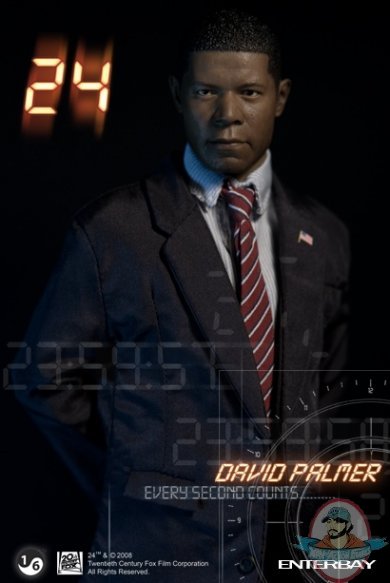
Imported from Hong Kong! Fox's high-rated series 24 is brought to life with this series of 1/6-scale action figures of its most popular characters -- CTU agent Jack Bauer and President David Palmer. Each figure comes with a museum-like likeness of the actor and a detailed and tailor-made outfit. Jack Bauer comes with watches, hand gun, silencer, holster, flashlight, and messenger bag. Both figures also come with additional posing hands. Each figure stands roughly 12" tall and comes with a display stand. Certificates of Authenticity included.
|
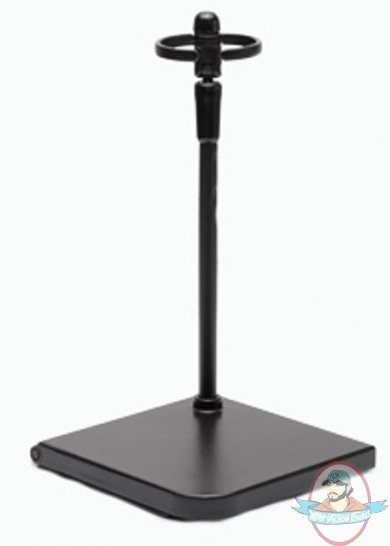
360 degrees Rotatable Clamp
Adjustable 5-level stand
Stand: Full Metal casting
Base: Full Metal casting
Highly flexible, this original figure stand allows you to place your figure in almost any position possible.
By simply pressing down the metal knob you can easily adjust the height of the stand.
The durable clamp can hold any of our 1/6 Scale REAL MASTERPIECE Figure and other action figures similar to this size.
|
> 12 points of Articulation
> Extraordinarily lifelike muscle definition
> Maintained the robust build of Bruce Lee
> 3 extra posing hands
> Carefully crafted with supreme texture for finishing touch
> Made of extremely durable plastic for lifetime enjoyment
> New improved ankle joints
* This product is suitable for Bruce Lee “Fist of Fury” and the head sculpts and clothing for this edition as well as all upcoming Bruce Lee products’ head sculpts.
|
Imported from Hong Kong, made by Enterbay!
The Storm Warriors Heart, 12 inches collectible figure features:
30 cm Tall
Authentic likeness of Nicholas Tse as “Heart”
Movie accurate costume detailing including chest, shoulder, shins, arm and forearm armor
6 interchangeable gloved hands
RM-1 Body (Newly improved Ankle Joints)
Features 15 points of Articulation
Figure Stand FS-200
2009 New exclusively developed & designed packaging box set
|
Imported from Japan! Medicom celebrates the 20th release of their acclaimed Be@rbrick series with blockbuster mini-figures! Tony Stark makes his first appearance as a Be@rbrick in his Mark VI armor from Iron Man 2. New to the Toy Story universe, Lots-O-Fun Bear also pops up to receive your love. The Horror subset is well represented by beloved 60's icon Captain Action, and the Animal is everyone's favorite Mogwai, Gizmo from Gremlins. Throw in two new Artist releases from fragmentDesign and Mark Gonzalez, as well as everyone's favorite, short-packed variants, and Series 20 promises to be the best Be@rbrick release in the past 11 years. Blind mystery box packaging.
|
FYE Exclusive Funko Pop Rocks Kurt Cobain vinyl figure #67. Kurt is seen here wearing his brown sweater, t-shirt and jeans with his acoustic guitar from Nirvana's legendary appearance on MTV's Unplugged in 1993.
|
"The Seawolf class attack submarine (SSN) was the intended successor to the Los Angeles class, ordered at the end of the Cold War in 1989. At one time, an intended fleet of 29 submarines was to be built over a ten-year period, later reduced to twelve. The end of the Cold War and budget constraints led to the fleet being canceled at three boats in 1995, and led to the design of the smaller Virginia class. They are quieter than the previous Los Angeles class submarines, larger, faster, have twice as many torpedo tubes for a total of 8, and carry more weapons, but were also much more expensive. They were intended to combat the then-threat of large numbers of advanced Soviet ballistic-missile submarines in deep ocean, such as the Typhoon class, and to reply to the new Soviet Akula class attack submarines. They were built using HY-100 steel rather than HY-80 steel which is what previous classes had used. However they also have extensive equipment for shallow-water operations, including a floodable silo capable of deploying eight combat swimmers and their equipment at once. The boats can also carry up to 50 UGM-109 Tomahawk cruise missiles for attacking land and shipping targets. "
|
This auction is for one figure of the immortal hulk hogan from the classic superstars collectorse series line from jakks. This is the harder to find varinat with the 1985 world championship belt not the standard winged eagle belt that comes with most of these figures. It is mint on card. The card is in great shape with minimal shelfwear (small rip on the bottom center of teh card, barelty noticeable), photo is stock photo. Item still displays awesome. A great and highly collectible figure from the hall of famer. Figure comes with his trademark tear away hulkamania shirt
|
In collaboration with CD Projekt Red, Dark Horse presents this limited-edition polystone bust. As fans of The Witcher already know, Gwent is a unique card game where bluffing and deception are as important as the armies one brings to the table. This bust gave Dark Horse an opportunity to capture Geralt's expression and add to his characterization.
|
"Gemini 4 (officially Gemini IV) was a June 1965 manned space flight in NASA's Gemini program. It was the 2nd manned Gemini flight, the 10th manned American flight and the 18th spaceflight of all time (includes X-15 flights over 100 km). It was crewed by James McDivitt and Edward White. Gemini 4 would be the first multi-day space flight by the United States, designed to show that it was possible for humans to remain in space for the length of time required to fly the moon and back. A second objective for the four-day, 62-orbit mission was for Gemini 4 to rendezvous and fly in formation with the spent second stage of its Titan II booster rocket. And although not originally scheduled for this mission, Gemini 4 would also see the first ever American Extra-vehicular activity (EVA, known popularly as a space walk). NASA moved up the original schedule after Aleksei Leonov on Voskhod 2 the previous March performed the first EVA ever, lest the US appear to be falling behind the Soviets in the space race. Gemini 4 would set a record for flight duration, and ease fears about the medical consequences of longer missions. It also would also be the first use of the new Mission Control center outside Houston, which because of the flight's long duration, had to conduct three-shift operations "
|
The Mercury Seven was the group of seven Mercury astronauts picked by National Aeronautics and Space Administration in April 1959. They are also referred to as the Original Seven and Astronaut Group 1. This was the only astronaut group with members that flew on all NASA manned spacecraft of the 20th century, including the Space Shuttle with John Glenn's flight on STS-95. The astronauts wrote first-hand accounts of their selection and preparation for the Mercury missions in the 1962 book We Seven. In 1979 Tom Wolfe published a less sanitized version of their story in The Right Stuff. Wolfe's book was the basis for the popular film directed by Philip Kaufman.
|
"Apollo 16 (April 16 – April 27, 1972) was launched from John F. Kennedy Space Center and was the fifth manned lunar landing mission. The crew consisted of John W. Young as spacecraft commander, Ken Mattingly as command module pilot, and Charlie Duke as lunar module pi lot. Apollo 16 was the first scientific expedition to inspect, survey, and sample materials and surface features in the Descartes region of the rugged lunar highlands. Duke commenced the record setting lunar surface stay of 71 hours and 14 minutes by maneuvering the lunar module Orion to a landing on the rough Cayley Plains. Charles Moss Duke, Jr. (or Charlie Duke) a retired USAF Brigadier General, was a United States astronaut for NASA. He is one of only twelve men who have walked on the moon. In the 1998 miniseries ""From the Earth to the Moon"" Charlie Duke was portrayed by J. Downing. It was Charles Duke who left a plastic-encased photo portrait of his family on the moon. This signed capsule will have these other inclusions: specialized packaging : a Museum Quality Case ; a Signature Plate ;a COA (Certificate of Authenticity) ; a portfolio about the item "
|
DC COMICS
(W) Sam Humphries (A) Ronan Cliquet & Various (CA) Brandon Peterson
Simon Baz and Jessica Cruz venture into space to train with the Green Lantern Corps! But will they reach their destination when Jessica is jettisoned out of transluminal travel and forced to find her way through the void of space? Meanwhile, the Corps agrees to work with the Sinestro Corps to protect the universe, one Green and one Yellow per sector. So what does this mean for Sector 2814-and Simon and Jessica's partnership? Collects GREEN LANTERNS #22-26.
|
|
|
|
|
This auction is for one figure of the immortal hulk hogan from the classic superstars collectorse series line from jakks. This is the harder to find varinat with the 1985 world championship belt not the standard winged eagle belt that comes with most of these figures. It is mint on card. The card is in great shape with minimal shelfwear (small rip on the bottom center of teh card, barelty noticeable), photo is stock photo. Item still displays awesome. A great and highly collectible figure from the hall of famer. Figure comes with his trademark tear away hulkamania shirt
|
The Suicide Squad Finders Keypers will give you a really cool place to store your keys. These 10" statues are plastic and feature a removable key chain that nests in the base. Ridiculously highly detailed, with exceptional attention to likeness and paint, and it watches over your keys!
Pre-Order! Available: October
|
"In the 1970s, Boeing proposed a successor to the three-engined Boeing 727 aircraft. In the late 1970s, the final design of the 757 was decided, utilizing the same cabin cross-section as the 727/737 but with a longer fuselage, a redesigned wing and modern high-bypass fuel effficient turbofan engines. Boeing also designed a state-of-the-art advanced two-crew flightdeck with Electronic Flight Instrument System (EFIS), incorporating six cathode-ray tube (CRT) displays housing primary attitude data, navigation display and engine parameters including an automated crew alerting system. 757 incorporates two Rolls-Royce RB211, Pratt & Whitney PW2037, PW2040 or PW2043 turbofan engines. The first operator of the Boeing 757-200 was the Eastern Airlines. The 757 programme received orders from launch carriers Eastern Airlines and British Airways in late 1978. There was an extended range version of the aircraft, the 757-200(ER) which first flew on April 8, 1986 and was delivered to Royal Brunei on May 6, 1986. In September 1987, the first Boeing 757-200(PF) was delivered to UPS. On July 15, 1988, the 757-200M first flew and was delivered to Royal Nepal Airlines. The 757-200 was the only version of 757 available until the late 1990s. The 757-200 can carry up to 229 passengers. On May 2, 2000 in Seattle, American Airlines announced order for 20 Boeing 757-200s and deliveries are scheduled to begin in 2001 to 2002."
Pre-Order! Available: October
|
This is for the 1/6 Scale Scottish Freedom Warrior Leather Sheath by Iminime. This is for the sheath Only!
|
The wait is over! The Twelfth Doctor has been revealed and Bif Bang Pow! is proud to introduce the Twelfth Doctor in an 8-inch scale EMCE action figure! Peter Capaldi as the Twelfth Doctor stands about 8-inches tall and features real fabric clothing, accessories, and multiple points of articulation. Ages 14 and up.
Produced by the BBC, Doctor Who is the longest-running sci-fi TV series in the world. The award-winning show presents the adventures of a time traveler known simply as "the Doctor." Along with his companions, this mysterious Time Lord journeys through time and space using his TARDIS, which appears from the outside to be an ordinary police phone booth.
Pre-Order! Available: October
|
"Stun" all your Trekkie friends!
• Authentic, full-sized, White Handle phaser pistol with detachable mini hand phaser.
• It's a classic, officially licensed Star Trek series replica.
• Adjustable lights and sounds.
• You need one and so do your pals!
Case contains 8 individually packaged phasers. This Star Trek Tek White Handle Phaser is "stunning"! It's the original 2-in-1 design with detachable mini hand phaser. This officially licensed Star Trek series weapon features a Type-1 mini hand phaser that separates from the Type-2 pistol. For maximum authenticity, it's a full-scale reproduction modeled after the initial Star Trek prop. With realistic beam lights, sound effects, and adjustable power settings, this awesome replica is one of our best-selling items. You need one and so do all your friends. But remember: Always treat phasers as if they were fully loaded with nadions - it's fun until someone puts an eye out!
To activate the sound, you must remove the plastic display tab and turn on the hand phaser. (This is done by clicking the far right dial forward toward the front of the pistol.) To trigger the lights, rotate the front dial forward.
Upc: 699788175231
|
Whats a high school party without a theme This year, Monster High students selected polka dots, and theyre getting glammed up for the party to look DotDead Gorgeous! This Monster High Lagoona Blue Party Doll is sure to make a splash in a strapless print dress with blue trim and layered details that include pink accents and black polka dots. Signature details include a starfish at her waist, a shell in her hair and translucent shoes with silvery glitter. Its time to polkadot! Doll cannot stand alone. Ages 6 and older.
|
Preorder figure of paul burchill from deluxe aggression 17 due out in november.
|
A blade from the First Age, Orcrist was wielded by Thorin Oakenshield in The Hobbit: An Unexpected Journey. This full-size prop replica from The Noble Collection measures 39 1/2" long and features a stainless steel blade. The sword comes with a die-cast metal display.
|
A PREVIEWS Exclusive! One of cinema's greatest horrors - the Frankenstein monster from Universal Studios' Frankenstein - joins the Living Dead Dolls line in a new black & white style, available exclusively through PREVIEWS! Standing 10" tall, Frankenstein has 5 points of articulation, wears real cloth clothing, and comes packaged in a window box
|
This Listing is for Wizard of Oz 2013: Wicked Witch of The West Barbie Doll.
|
Based on the iconic 1989 film that defined Batman for the modern generation.
We are honored to present this 18" tall poseable figure featuring Michael Keaton's likeness, utility belt, batarang, grapple-gun, interchangeable hands, and loads more. Featuring over 20 points of articulation, incredible detail, and a real fabric cape.
This is a must have for Batman fans and collectors.
|
Based on the iconic 1989 film that defined Batman for the modern generation.
We are honored to present this 18" tall poseable figure featuring Michael Keaton's likeness, utility belt, batarang, grapple-gun, interchangeable hands, and loads more. Featuring over 20 points of articulation, incredible detail, and a real fabric cape.
This is a must have for Batman fans and collectors.
|
In the mid-sixties, there were two attempts to build an "Indianapolis of the West", a motor speedway that would take all of the great features of Indy and expand on them in a way that would accommodate races by all four dominant racing sanctioning bodies at that time: USAC & NASCAR for oval races, NHRA for drag races and FIA for road courses. Without the help of David Lockton, this dream would have never come true. The opening race took place in August 1970 with the promise of bringing celebrities to the track, in fact, the first race was a Celebrity Pro-Am race featuring many stars from the entertainment industry with pro race winning drivers.
|
This Listing is for a Set of 9 Figures.
The set Features:
1x Blake Griffin.
1x Carmelo Anthony.
1x Derrick Rose.
1x Kevin Durant.
1x Kevin Love.
1x Lamarcus Aldridge.
1x Lebron James.
1x Pau Gasol
1x Rajon Rondo.
|
Unleashed from the horror movie The Relic comes the frightening Kothoga creature model kit! With its powerful tail, menacing claws, and huge mandible pinchers, it takes its place as one of the scariest movie monster designs every produced by the legendary Stan Winston Studios. The model comes with a museum-style display base and a detailed tribal idol statue.
|
Boldly go where no Star Trek model has gone before with this model kit of the classic starship Enterprise that comes packaged in a tin lunchbox! This 1/1000-scale Enterprise features easy snap assembly and comes with optional parts to make the pilot versions of the ship, full-color decals, and a display stand. Plus, the lunchbox features vintage graphics of the starship in flight
|
THIS LISTING IS FOR ONE BRAND NEW FULL SIZE (4´6´W x 7"H) MAGIC JOHNSON LARRY BIRD FATHEAD WALL GRAPHIC. ITS' THE PERFECT GIFT FOR ANY MAGIC JOHNSON,LARRY BIRD OR LOS ANGELES LAKERS FAN. THESE ARE MADE FROM TOUGH AND FADE RESITANT VINYL AND FEATURE HIGH RESOLUTION 3D GRAPHICS. FATHEADS USE LOW TACK ADHESIVE AND CAN BE MOVED AND REUSED WITHOUT DAMAGING SURFACES. DONT MISS YOUR CHANCE TO OWN THIS ITEM! THIS ITEM IS BRAND NEW IN THE PACKAGE AND HAS NEVER BEEN OPENED OR USED. ALL OUR FATHEADS INCLUDE THE SMALLER ADDITIONAL FATHEADS YOU SEE.
|
This listing is for a preorder exclusve 2 pack of divas featuring beth phoenix, the glamazon vs maria. I believe tehse are teh first ruthless aggression style figures for both. This is a rare exclsuive set and will come to you mint in box. Awesoem set! Get your now!
|
This auction is for an in hand and ready to ship figure of ecw original, announcer joey styles from ecw series 2. Dont be a punk get yours today! A greatly designed and really cool figure. It will come to you mint on card and straight from a factory case. Item displays awesome. A great and highly collectible figure from the famous wrestler. Surely to go up in value. A great figure from a great series. Now thats cool! Bid now!
|
This auction is for an in hand and reayd to ship rare exclusve 2 pack of divas featuring melina and the very first figure of ashley massaro. This is a rare exclsuive set and will come to you mint in box. Awesoem set! Get your now while theyre still affordable.
|
The Pirate Captain's Hanger Sword is made of beautiful antiqued brass and has a steel hilt. The fully tempered high carbon steel blade is worth its salt against any sea beast or while swarming the side of a galley. Your pirate captain's costume is incomplete without this hanger. Overall, the sword measures 32 1/2" long, with a 26" long blade.
Pre-Order! Available: October
|
"RMS Titanic is one of the most famous historical ships. Titanic was the biggest moving object ever build. She was not only biggest but also backed with superior quality and performance. Titanic was the property of White Star Corporation, based in Britain. The RMS (Royal Mail Ship) Titanic, an Olympic class passenger liner, was a British luxury passenger liner that sank on April 15, 1912, en route to New York from Southampton, England, on its maiden voyage. The largest and most luxurious ship afloat, it had a double-bottomed hull divided into 16 watertight compartments. The Titanic struck an iceberg on the night of April 14, at 11:40 PM. Titanic sank, with great loss of life, at 2:20 AM, on April 15, 1912. The United States Senate investigation reported that 1,517 people perished in the accident, while the British investigation has the number at 1,490. Regardless, the disaster ranks as one of the worst peacetime maritime disasters in history, and is by far the best known. It carried some of the richest, most powerful industrialists, multi-millionaire entrepreneurs of her day. The sinking of Titanic has been the basis for many novels describing fictionalized events on board the ship, such as Titanic: The Long Night written by Diane Hoh. Many reference books about the disaster have also been written since Titanic sank, the first of these appearing within months of the sinking. The book ‘A Night to Remember’ was made into a movie in 1958 and was also transformed into ‘Titanic: The Musical’, with a book by Peter Stone and music and lyrics by Maury Yeston. Several films and TV movies were produced the first being In Nacht und Eis as early as 1912. The 1997 film 'Titanic', starring Leonardo DiCaprio and Kate Winslet was a critical and commercial hit, winning eleven Academy Awards and holding the record for the highest box office returns of all time."
|
"USS Arizona history specifically (BB-39) was laid down on March 16, 1914. The USS Arizona BB 39 was launched on June 19, 1915, and was commissioned on October 17, 1916. After shakedown off the east coast and the Caribbean, she worked out of Norfolk, Virginia. On December 13, 1918, Arizona served in the honour escort convoying of President Woodrow Wilson in Brest, France. In January 1920, it joined Battleship Division 7 for winter and spring maneuvers in the Caribbean. The ship worked out of Guantanamo Bay during this period, and also visited Bridgetown, Barbados, in the British West Indies, and Colon, Panama in the Canal Zone, before it sailed north to New York, where it arrived on May 1. Placed in reduced commission on July 15, 1929, Arizona remained in yardhands for the next 20 months. Upgrades include new masts, new anti-aircraft guns and armor. USS Arizona BB39 also received new boilers and new main cruising steam turbines. It was placed in full commission on March 1, 1931. Arizona was moored in Pearl Harbor 's ""Battleship Row"" on the morning of December 7, 1941, when Japanese aircraft carrier attacked. It was hit by several bombs, and the explosion totally destroyed the forward hull, collapsing its forward superstructure, causing it to sink, with the loss of more than 1100 of its crew members. The wreckage of the battleship remains at Pearl Harbor. In 1950, it began to be used as a site for memorial ceremonies, and early 1960, a memorial structure was built through the ship 's sunken remains. Arizona won a battle star for service in World War II."
|
"The Liberty ships were cargo ships built in the United States during World War II. They were British in conception but adapted by the USA, cheap and quick to build, and came to symbolize U.S. wartime industrial output. Based on vessels ordered by Britain to replace ships torpedoed by German U-boats, they were purchased for the U.S. fleet and for lend-lease provision to Britain. Eighteen American shipyards built 2,751 Liberties between 1941 and 1945, easily the largest number of ships produced to a single design. "
|
"RMS Titanic is one of the most famous historical ships. Titanic was the biggest moving object ever build. She was not only biggest but also backed with superior quality and performance. Titanic was the property of White Star Corporation, based in Britain. The RMS (Royal Mail Ship) Titanic, an Olympic class passenger liner, was a British luxury passenger liner that sank on April 15, 1912, en route to New York from Southampton, England, on its maiden voyage. The largest and most luxurious ship afloat, it had a double-bottomed hull divided into 16 watertight compartments. The Titanic struck an iceberg on the night of April 14, at 11:40 PM. Titanic sank, with great loss of life, at 2:20 AM, on April 15, 1912. The United States Senate investigation reported that 1,517 people perished in the accident, while the British investigation has the number at 1,490. Regardless, the disaster ranks as one of the worst peacetime maritime disasters in history, and is by far the best known. It carried some of the richest, most powerful industrialists, multi-millionaire entrepreneurs of her day. The sinking of Titanic has been the basis for many novels describing fictionalized events on board the ship, such as Titanic: The Long Night written by Diane Hoh. Many reference books about the disaster have also been written since Titanic sank, the first of these appearing within months of the sinking. The book ‘A Night to Remember’ was made into a movie in 1958 and was also transformed into ‘Titanic: The Musical’, with a book by Peter Stone and music and lyrics by Maury Yeston. Several films and TV movies were produced the first being In Nacht und Eis as early as 1912. The 1997 film 'Titanic', starring Leonardo DiCaprio and Kate Winslet was a critical and commercial hit, winning eleven Academy Awards and holding the record for the highest box office returns of all time."
|
"The United States Navy commissioned 175 Fletcher-class destroyers between 1942 and 1944. They were built by shipyards across the United States for service in World War II, and some served during the Korean War and into the Vietnam War. Ironically, many were sold to the very countries they had fought against: Italy, Germany, and Japan, as well as other navies, where they would go on to have even longer, distinguished careers. Several others were canceled prior to being laid down. "
|
"USS Yorktown CV-10 is an Essex-class aircraft carrier of the United States Navy. The CV-10 was initially named as Bon Homme Richard. On September 26, 1942, it was renamed in tribute to USS Yorktown CV-5. t became the fourth US warship to bear the name of a town in Virginia. The CV-10 was reconstructed to SCB-27A design by the Puget Sound Naval Shipyard which began in March 1951. It was recommissioned in February 1953. The CV-10 was reclassified as an ""Attack Aircraft Carrier"" and was redesignated CVA-10. The CV-10 has a modernized flight deck with an enclosed ""hurricane"" bow. The CV-10 was reclassified as an ""Antisumarine Warfare Support Aircraft Carrier"" and was redesignated as CVS-10 on September 1, 1957. The CV-10 was formally dedicated as the first ship of the Naval and Maritime Museum. "
|
"USS New Jersey (BB-62), also known as Big J or Black Dragon, is an Iowa class battleship. Among her class, she is notable for having earned the most battle stars for her combat actions, and for being the only one to have served a tour of duty in Vietnam during the Vietnam War. New Jersey was launched on December 7, 1942 by the Philadelphia Naval Shipyard. Her first action as flagship was a bold two-day surface and air strike by her task force against the supposedly impregnable Japanese fleet base on Truk in the Carolines. She destroyed a trawler, and with other ships, sank destroyer Maikaze, as well as firing on an enemy plane which attacked her formation. On May 17, 1951, New Jersey arrived from Japan off the coast of Korea. During her two tours of duty in Korean waters, she played the role of seaborne mobile artillery. On September 25, she sailed for her first tour of gunfire support duty along the Vietnamese coast. On September 30, she fired her first shots in battle in over sixteen years. Firing against Communist targets in and near the Demilitarized Zone, her big guns destroyed two gun positions and two supply areas. On February 8, 1991, New Jersey was decommissioned at Bremerton, Washington. She arrived at the Philadelphia Naval Shipyard on November 11. Since then, she has been restored, opened and established as an educational museum and a tribute to the sailors who served aboard her. New Jersey opened as a museum and memorial in October 2001. Our USS New Jersey wooden ship model is an exact replica of the original, handcrafted with vigilance by master craftsmen. After it is sanded and puttied, skilled artists paint on the intricate details. Hand-casted resin and handmade metal parts also constitute the model. Clear lacquer provides the finishing touch and long-lasting protection. Each ship comes on a a display base with brass pedestals and a brass name plate. All items then undergo quality control before being delivered to eagerly waiting customers. "
|
The USS Missouri (BB-63) ("Mighty Mo" or "Big Mo") is a U.S. Navy battleship, and was the third ship of the United States Navy to be named in honor of the U.S. state of Missouri. Missouri is the final battleship to be built by the United States, and among the Iowa-class battleships is notable for being the site of the surrender of the Empire of Japan at the end of World War II. Missouri was ordered on 12 June 1940 and her keel was laid at the New York Navy Yard in the New York City borough of Brooklyn on 6 January 1941.
|
"The Yamato class battleships of the Imperial Japanese Navy were the largest naval vessels during World War II. Yamato, together with Musashi, made little impact during World War II. In October 1944, Yamato opened on US escort carriers and destroyers and it was the first and last of its battles with enemy ships. It has seen little action during the past four years. Yamato was sent on a planned suicide mission against the U.S. Navy forces attack on Okinawa. On April 7, 1945, Yamato was hit by successive waves of US carrier based aircraft and sank after absorbing 8 bombs and 13 torpedo hits. Out of 3332 crew, fewer than 300 onboard survived. The Yamato has a speed of 27 knots and a range of 7,200 nautical miles at 16 knots. "
|
"The German battleship Bismarck is one of the most famous warships of World War II. The warship was named after the 19th-century German chancellor Otto von Bismarck. The Bismarck class battleships were a class of battleships built by Germany for World War II. The class' ships were the third-largest battleships ever completed by displacement, behind the Japanese Yamato class and the Iowa class. The Bismarck and the Tirpitz, the only two ships of the Bismarck class were laid down in 1936 and launched three years later, nominally 35,000 tons each in accordance with the 1923 Washington Naval Treaty after the tonnage restriction set in place by the Treaty of Versailles was effectively lifted by the Anglo-German Naval Agreement. They were a follow up to the Scharnhorst battlecruisers, being quite similar in design, armour and outward appearance. Although Bismarck and Tirpitz were nearly identical insofar as basic configuration and dimensions, Bismarck has become something of a naval legend while Tirpitz led a comparatively unglamorous life. The Bismarck class embodied much of what made Germany's World War I battleships outstanding combat vessels and their design was broadly influenced by the last German battleship classes of World War I. The Bismarck class was reasonably well suited as a commerce raider, with a good operational range and sufficient speed to elude any pursuit. The Bismarck class' top speed was greater than any opposing British capital ship, including their largest battlecruiser Hood and new King George V class battleships. The wreck of Bismarck was discovered on June 8, 1989 by Dr. Robert Ballard, the oceanographer also responsible for finding the Titanic."
|
"USS Arizona history specifically (BB-39) was laid down on March 16, 1914. The USS Arizona BB 39 was launched on June 19, 1915, and was commissioned on October 17, 1916. After shakedown off the east coast and the Caribbean, she worked out of Norfolk, Virginia. On December 13, 1918, Arizona served in the honour escort convoying of President Woodrow Wilson in Brest, France. In January 1920, it joined Battleship Division 7 for winter and spring maneuvers in the Caribbean. The ship worked out of Guantanamo Bay during this period, and also visited Bridgetown, Barbados, in the British West Indies, and Colon, Panama in the Canal Zone, before it sailed north to New York, where it arrived on May 1. Placed in reduced commission on July 15, 1929, Arizona remained in yardhands for the next 20 months. Upgrades include new masts, new anti-aircraft guns and armor. USS Arizona BB39 also received new boilers and new main cruising steam turbines. It was placed in full commission on March 1, 1931. Arizona was moored in Pearl Harbor 's ""Battleship Row"" on the morning of December 7, 1941, when Japanese aircraft carrier attacked. It was hit by several bombs, and the explosion totally destroyed the forward hull, collapsing its forward superstructure, causing it to sink, with the loss of more than 1100 of its crew members. The wreckage of the battleship remains at Pearl Harbor. In 1950, it began to be used as a site for memorial ceremonies, and early 1960, a memorial structure was built through the ship 's sunken remains. Arizona won a battle star for service in World War II."
|
"Launched in 1943 the USS Intrepid, CV-11 served the United States Navy for 31 years. Nicknamed the ""Fighting I"", she proved both and resolute. The Intrepid served three tours of duty in Vietnam. The USS Intrepid (CVS-11) participated in the Pacific Theater of Operations of World War II, most notably the Battle of Leyte Gulf. Later she recovered spacecraft of the Mercury and Gemini programs and served in the Vietnam War. Since 1982, Intrepid has been a museum ship in New York City called the Intrepid Sea-Air-Space Museum."
|
"The seventh USS Hornet CV 8 was a Yorktown class aircraft carrier of World War II. The USS Hornet or CV-8 Hornet was launched December 14, 1940 by Newport News Ship Building & Dry Dock Co., Newport News, Virginia, and commissioned at Norfolk on October 20, 1941. USS Hornet is notable for launching sixteen Army B-25s in the Doolittle Raid, as a participant in the Battle of Midway, and for action in the Solomons before being lost to an overwhelming air attack in the Battle of Santa Cruz Islands. The Doolittle Raid weighed 19,800 tons and stretched 809 feet 9 inches. She had a speed of 33 knots and could carry a crew of 1,889. Planned and led by Lieutenant Colonel Jimmy Doolittle, the Doolittle Raid was the first air raid by the United States to strike the Japanese home islands during World War II. It was the only time in US military history that US Army Air Forces (USAAF) bombers were launched from a US Navy aircraft carrier on a combat mission. "
|
|
|